


The Historical Cities 3.0 website was created for a project whose main goal is to discuss issues, experiences and solutions applied in historical cities, exclusively in terms of tourism development.
After analysing the visual identity concept (created by Studio Leon), we began working with the Promotion Department of the Krakow City Council to develop a mock-up of the website. This was one of the most important stages, which was intended to organise the entire vision into a single coherent project, which, importantly, is to be developed in the future with additional sections (subpages).
Due to the need to show the important details of the project and the type of connections and solutions that will be able to develop the project in a predetermined direction in the future, we decided at this stage to create a hi-fi mock-up, which is characterised by a high degree of detail.
Thanks to this approach, the mock-up stage allowed us to move on to the next stage, i.e. the implementation of graphics with a carefully worked out design architecture.
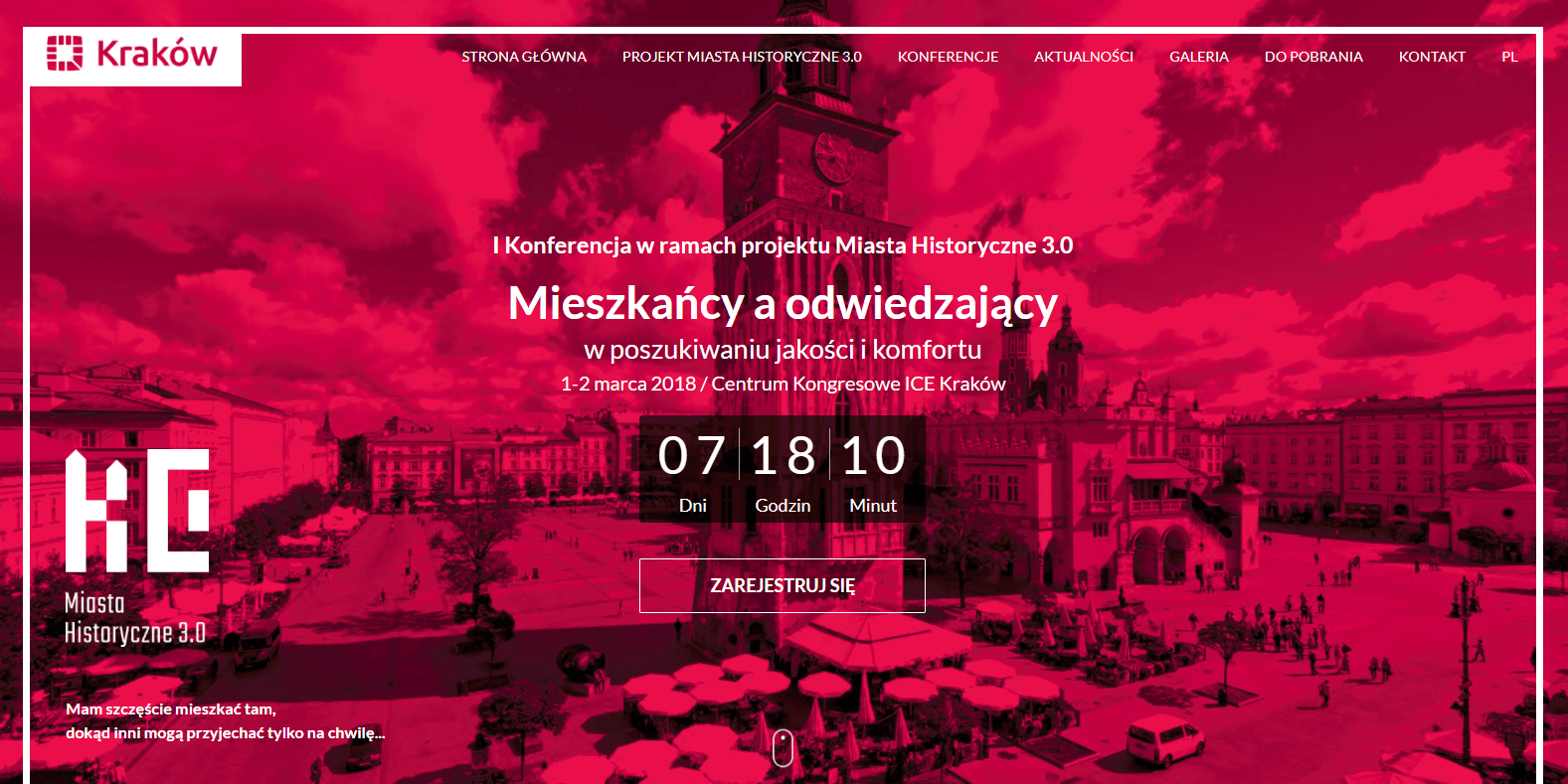
The graphic part was created in close correlation with the previously developed graphic identity for the Historical Cities 3.0 project and the identity of the City of Krakow itself. The concept was based on a block layout (including the home page and gallery) using the full width of the page. The first screen, with a counter counting down the time to the conference and a clear “register” button, serves to quickly familiarise the user with the type of website, i.e. a conference website. The rest of the website introduces the most important information about the Historical Cities 3.0 project.
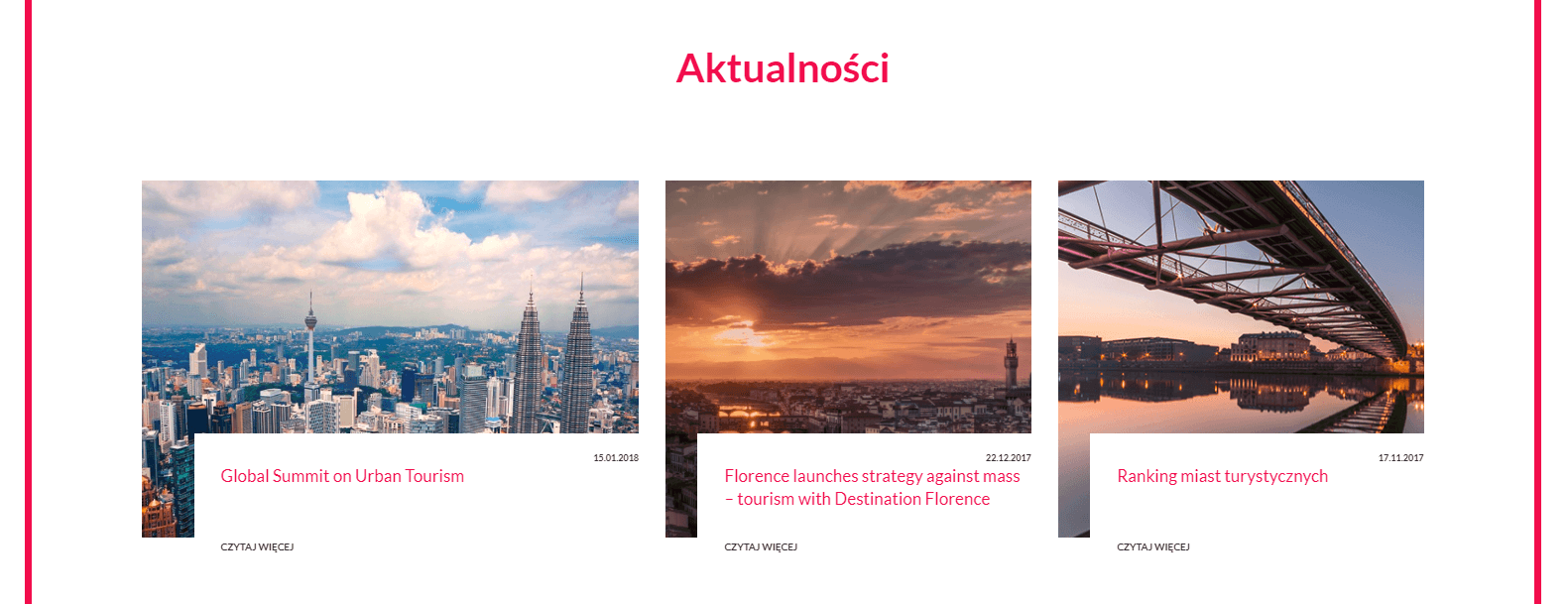
After approval and verification of the graphic designs, we began the process of programming implementation and connecting the website to an external ticket booking system for the upcoming conference. The website was prepared in two language versions. It has a fully manageable panel for editing content and graphics for independent administration of the website by employees of the Krakow City Council, who were trained in the use of the system after the entire implementation.
The newsletter system implemented on the website collects the e-mail addresses provided into an internal database, which is managed and automated in accordance with the guidelines adopted at the design stage.
Due to the fact that some of the subpages were to be purely descriptive, we used a mechanism to partially hide the text in order to better design this type of subpage – this allowed us to avoid the feeling of a “wall of text”, which usually makes users reluctant to read the content presented.
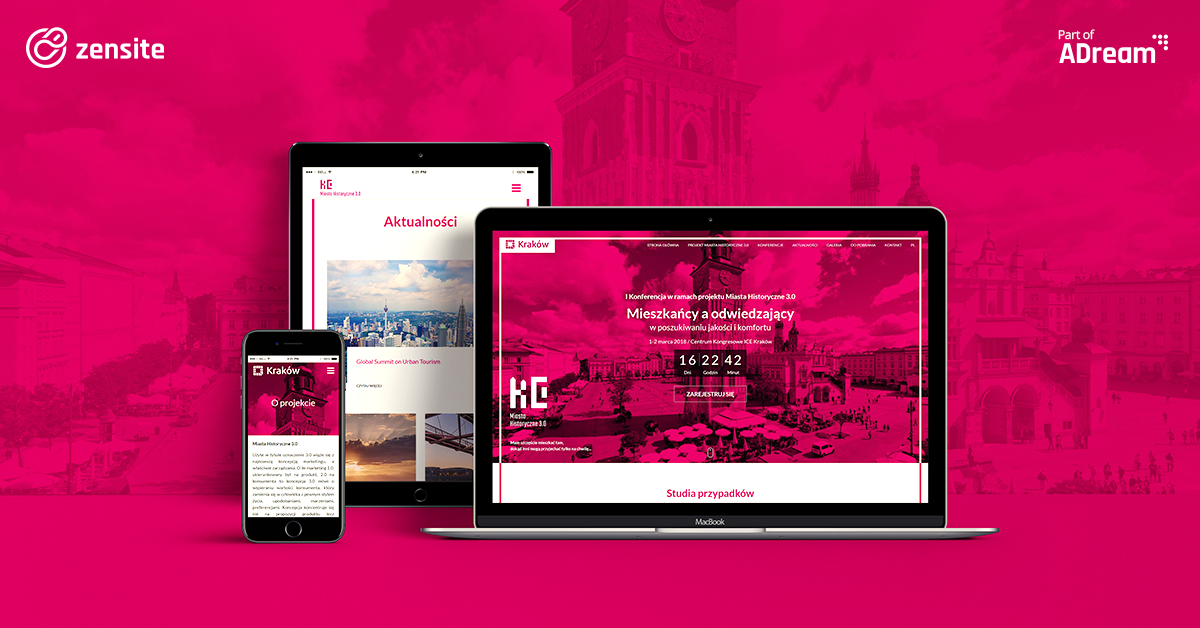
The whole process was completed with the preparation of a responsive version, which allows all elements of the website to be displayed correctly on mobile devices.
Visit the website: historicalcity.eu


